
Thoughts on Raising Kids
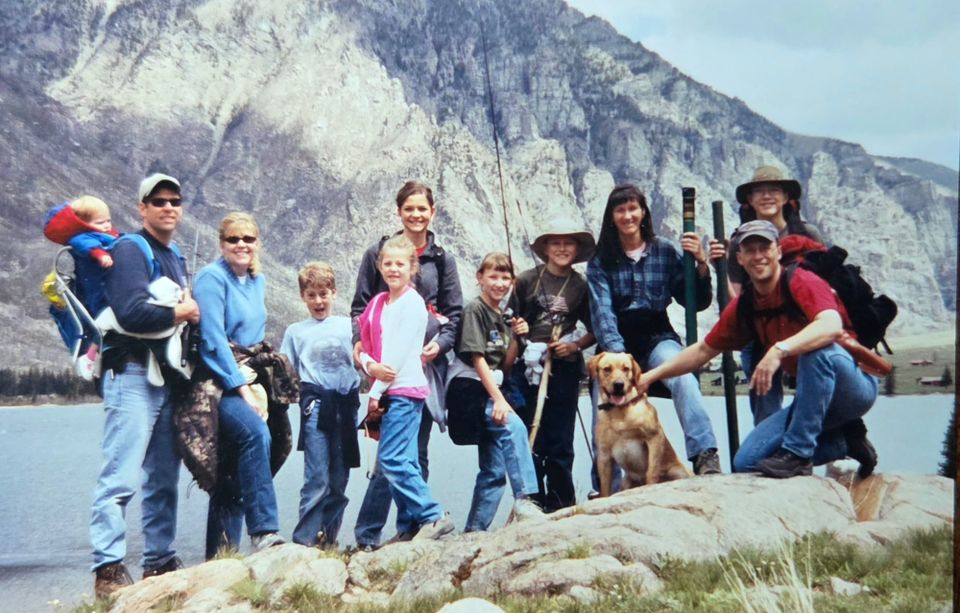
I am thinking about parenting this morning, both in the context of my recent teaching (The Stories the We Live By), but also in light of what's been happening in our own lives lately, with Malachi & Jordan (Hello, Old Friends). Kids inevitably grow up. And somewhere along the way, "Life happens". Maybe they get sick, or move away, or get married (or divorced). Or perhaps they just get caught up in lives (and children) of their own. However it happens, parents inevitably feel a sense of loss. Usually it catches us by surprise. And for some, this will be the first time we start to reflect seriously on our approach to parenting. I suspect most of us wish we had thought about parenting more, on the front end.
So here's what I think now, looking back...
- Identity – first and foremost, it strikes me that for Christians, one of our (most?) primary tasks as parents is to help this notion of "following Jesus" become a major part of our children’s identities. (This is who we are... this is who I am... and this is what we are about: following Jesus out into this world!)
- Conceptualization – more importantly, we must constantly seek to ensure that even as we help them put on this identity (I am a Christ-follower!), we must also be helping them put on the Christian concepts of faith and repentance, grace and forgiveness, sacrifice and shalom. These oh-so-important realities must so thoroughly surround and permeate this identity so as to become the vocabularies our children reach for when they try to describe what it means to them to actually live as followers of Jesus. (This is what it looks like to try and follow Jesus!)
How do our kids conceptualize what it means to be a Christian? If our children would describe their Christian faith simply as "being a good person" or "going to church on Sundays" – or "being better than those people"! – then I think it likely we have failed to show them the heart of real Christianity. Perhaps we have failed to get there ourselves... - Practitioners – lastly, and most importantly, we cannot neglect helping them develop the spiritual "muscle memories" which have historically accompanied true Christian faith: reading and praying, listening and hearing, heeding and responding, always in the direction of the hard and uncomfortable over the easy and the fun. This must also include developing a deep appreciation and appetite for both worship and sacrament (the "church" parts of being a Christian) along with sacrificial service of the poor and vulnerable among us (the "neighbor" parts of being a Christian). Like learning a foreign language, this happens best by immersion, when we are young.
In short, as Christian parents, our primary task in raising is our children is NOT to teach them to be well-behaved and nice, to play well with others, or to give them every opportunity to succeed and have fun. Those things are fine. But they do not go nearly far enough.
Rather, we must help our kids become well acquainted with the ways of Jesus, with the costs of following him, with suffering, with the self-discipline required. And we must also model and exude a deep and abiding joy and satisfaction that only such following can truly bring. We cannot teach them something we haven't yet learned for ourselves.
As parents, we have a very narrow window of opportunity to steer our children in the direction of who they will become. And even then, there are no guarantees, at least not in terms of particular outcomes; our kids get to play an active role in who they become spiritually as well. But I believe how we embrace this task of parenting as Christians will ultimately prove far more impactful in their Story (and in yours!) than any of their successes, failures, or accomplishments. It might well prove to be the most important thing you yourself do or accomplish. But thoughtful Christian parenting cannot (helpfully) be taken up downstream, after our children have grown. Our roles must change as they become teenagers, then adults, and then have families of their own.
So it must be embraced early, sooner rather than later, while we have our window...



Member discussion